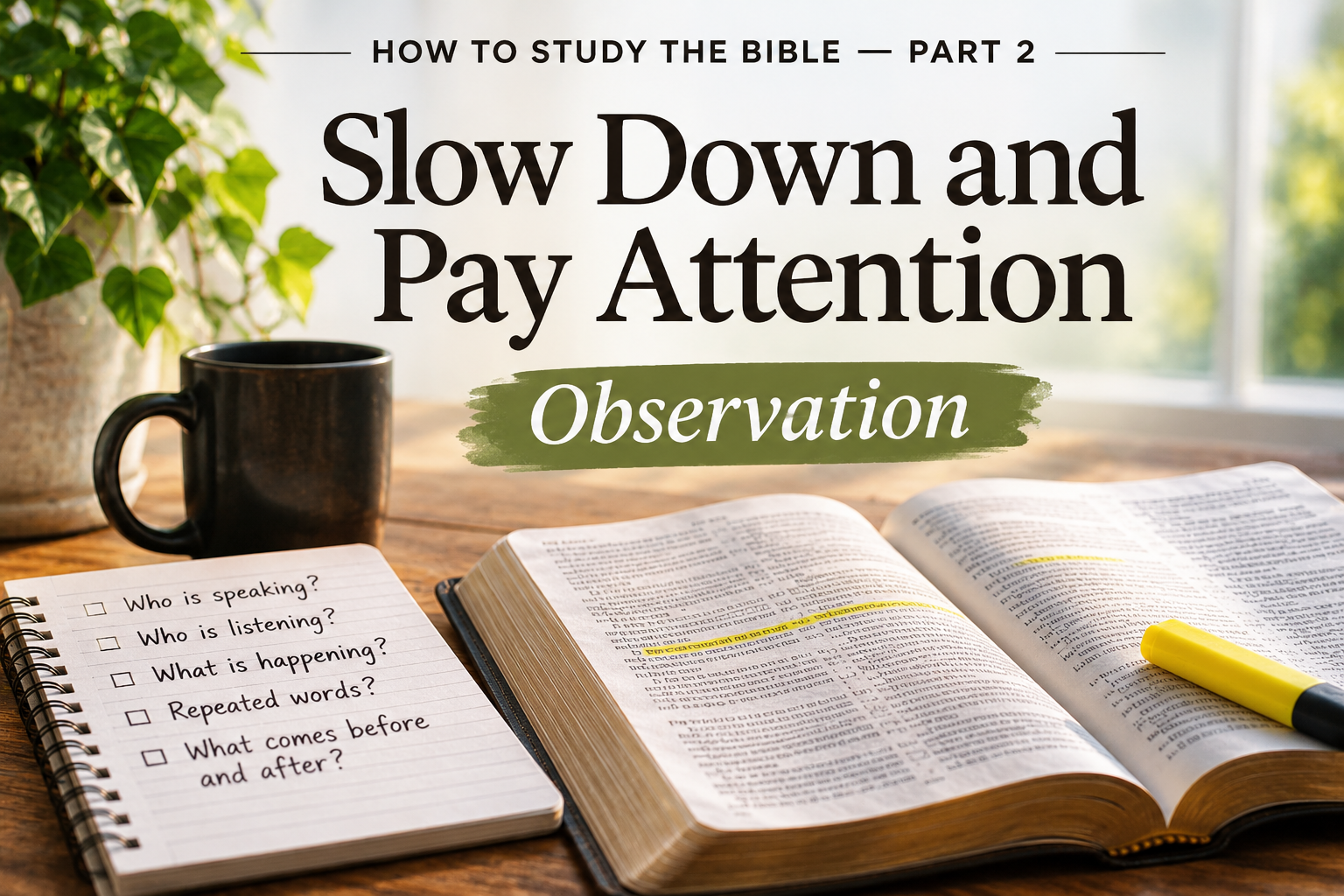
How to Study the Bible — Part 2
Slow Down and Pay Attention: Observation
In the first part of this series, we introduced the Inductive Bible Study method. The first step is observation, which simply means paying attention to what the Bible actually says.
That might sound obvious, but it's surprisingly easy to read a passage without noticing important details. We recognize a familiar verse, assume we know what it means, and move on. Before we ask what a passage means, we need to understand what it says.
What Should We Look For?
Observation is about asking questions and gathering information before jumping to conclusions.
Here are a few questions that can help:
Who is speaking, and who are they speaking to?
What is happening in the passage?
Are there repeated words, commands, or questions?
What happens before and after the passage?
Is there anything surprising or confusing?
You don't need to answer every question every time you read the Bible. The point is to slow down and notice things you might otherwise miss.
An Example from 1 Corinthians
In 1 Corinthians 11:23–26, Paul describes the Lord's Supper, or what we commonly call communion. These verses are often read in church when we take communion together.
But what happens if we read the verses around them?
We discover that Paul is correcting some serious problems in the Corinthian church. Some people were eating while others went hungry. Some were even getting drunk! Paul also repeatedly talks about the church gathering together and gives instructions about how believers should treat one another.
Those are important observations. We haven't even started interpreting the passage, but we're already noticing things we might have missed if we had only read the familiar verses about communion.
Context Matters!
One of the easiest ways to misunderstand Scripture is to take a verse out of context.
Remember, the chapter and verse numbers in our Bibles weren't part of the original writings. They were added centuries later to make passages easier to find.
That's helpful, but sometimes it causes us to forget that we're reading complete letters, histories, poetry, and other forms of literature.
Sometimes understanding a verse means reading the entire chapter, or even the whole book!
Give It a Try
Read 1 Corinthians 11:17–34 a couple of times this week. Before looking at a commentary or someone else's explanation, write down what you notice. What problems does Paul describe? What instructions does he give? What questions do you have? Don't worry about figuring everything out. We'll talk about interpretation in the next post. Remember, Bible study isn't always a straight line. Sometimes we'll return to observation after discovering something new. That's part of learning!
The goal isn't to find an answer as quickly as possible. It's to understand God's Word more faithfully.
Before deciding what the Bible means, make sure you've paid attention to what it says.
Next in the series: Part 3 — What Does That Actually Mean? Interpretation and Understanding Scripture in Context.