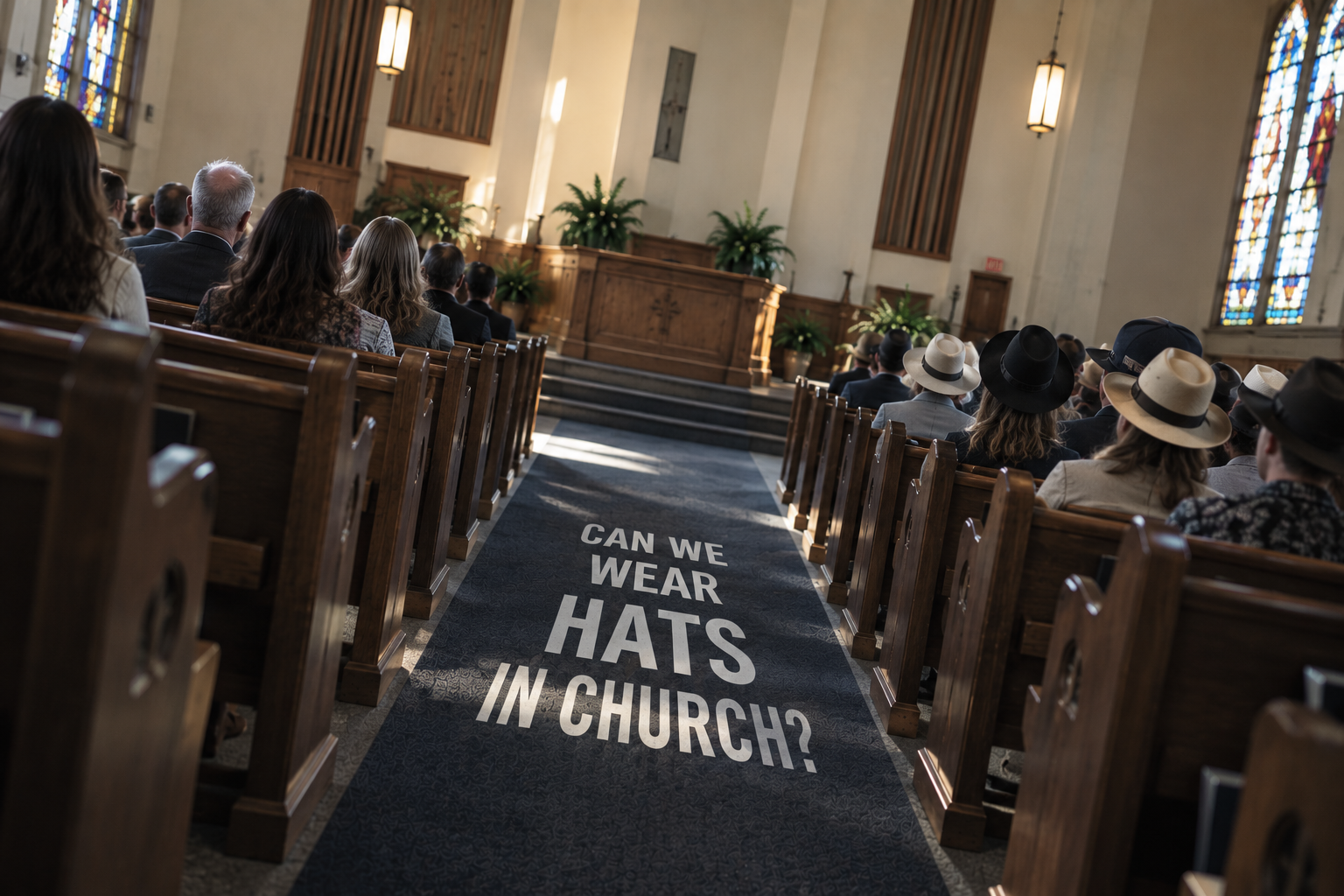
There was a time when an American man simply didn't leave the house without a hat. Look through old photographs from the early twentieth century and you'll see it everywhere—fedoras, bowlers, flat caps, newsboy caps. It didn't matter whether you were a banker in New York or a farmer in Kansas. Wearing a hat wasn't making a statement; it was simply what respectable men did. Today we've almost completely reversed course. Outside of a sporting event or a job that requires it, hats are often considered too casual. Fashion has changed. Culture has changed. But I still remember being told as a kid, "You can't wear your Mariners hat in church." I remember thinking: Why? No one quoted a Bible verse. No one opened the Scriptures. The answer seemed to be, "Because Christians don't do that." Looking back, I think that was my first exposure to an extra-biblical rule. It wasn't malicious and the people who taught me were sincere. But it planted a question that has stayed with me ever since: How do we know the difference between what God actually commands and what Christians simply become accustomed to doing?
Eventually I discovered that most people were thinking of 1 Corinthians 11, where Paul talks about men uncovering their heads and women covering theirs during worship. At first glance it seems straightforward, until you realize the Bible itself complicates a simplistic reading. Men like Samson and Samuel were known for long hair, and Absalom's flowing hair is described in remarkable detail without ever being presented as the problem. Whatever Paul is addressing, it can't simply be a universal Christian dress code. The church in Corinth lived in a particular culture where hairstyles and head coverings communicated honor, shame, masculinity, femininity, and social respectability in ways that simply aren't true in twenty-first-century America. Every manifestation of the church exists in a unique cultural setting. The cultural expressions change, but beneath them are timeless truths. Paul's concern wasn't ultimately about hats. It was about honoring God's created order and conducting ourselves in gathered worship in a way that reflected the gospel rather than confusing it.
That's one of the challenges of reading the Bible faithfully. We have to distinguish between timeless truth and cultural application without dismissing either one. Some biblical commands fit naturally within our culture, while others push against everything our culture values. Every generation has to wrestle with that tension. Jacob literally wrestled with God before he walked away changed. King Josiah rediscovered God's Law and suddenly realized how far Israel had drifted. In Nehemiah 8, Ezra simply read the Scriptures aloud, and the people wept because God's Word confronted them. But in contrast, Jeremiah rebuked people when they refused to listen to the Lord because they preferred following their own desires. God's people have always had to let Scripture correct their assumptions instead of trying to make Scripture affirm them. Sometimes that means challenging our culture. Other times it means challenging the traditions we've inherited in church.
That's where the irony comes in. Many Christians are rightly concerned about ignoring God's commands, but we're often far less concerned about adding to God’s commands. Jesus reserved some of His sharpest words for religious leaders who elevated human traditions to the level of divine authority. It's surprisingly easy to do. We start with a wise practice, then treat it like a biblical command. We inherit a cultural preference, then assume it has always been God's preference. Before long, we quietly communicate that someone is less spiritual because they don't dress, vote, sing, homeschool, educate their children, or worship quite like we do. Legalism isn't simply making rules; it's giving our rules God's authority. Ironically, both legalism and rebellion put us in the same place: sitting in God's chair, deciding what He should have said instead of listening to what He actually did say.
So, can Christians wear hats in church? Of course they can. They can also take them off. Neither choice earns God's favor. There may be situations where removing a hat is wise, respectful, or loving toward others, and Christians should gladly lay down personal preferences for the sake of those around them. But wisdom should never be confused with law, and tradition should never be confused with Scripture. As I've preached through 1 Corinthians, one verse has continued to echo in my mind: "Do not go beyond what is written" (1 Corinthians 4:6). That is timeless counsel. The church has enough battles to fight without inventing new ones. Let's be known for preaching Christ instead of preferences, for obeying God's Word instead of adding to it, and for remembering that God is far less interested in what's sitting on our heads than in what is reigning in our hearts. A righteous man in rags is better dressed than an unrighteous man who perfectly follows every religious dress code.